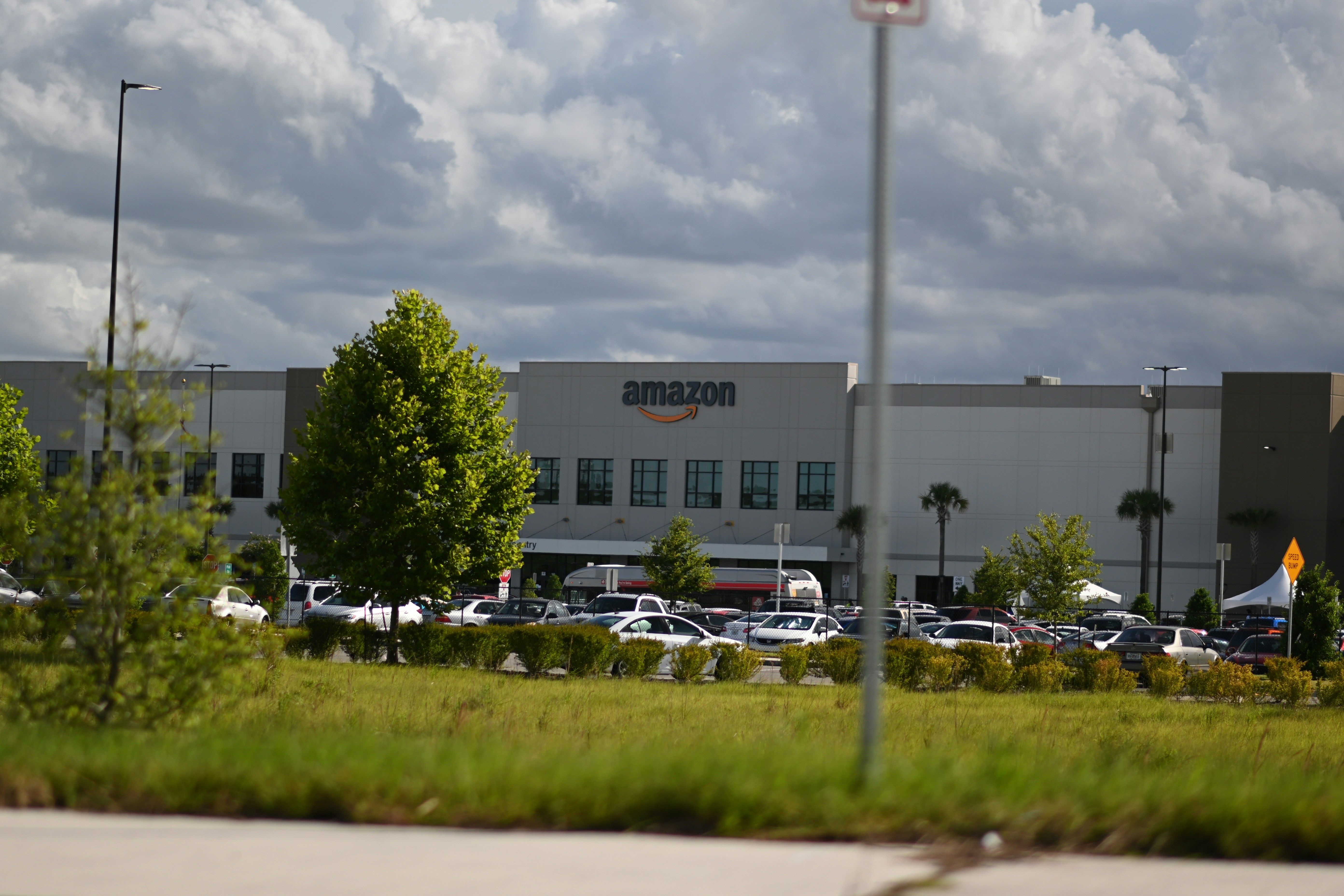
Competing With Amazon's Logistics Offering
Joe McIntyre ·
Where Amazon's fulfillment products are strong, where they aren't, and how an independent 3PL sells against them without pretending they don't exist.
Where Amazon's fulfillment products are strong, where they aren't, and how an independent 3PL can compete with Amazon fulfillment without pretending it doesn't exist.
Every provider I talk to has lost at least one conversation to Amazon without Amazon being in the room. A brand gets a quote, does the math against FBA or Multi-Channel Fulfillment, and goes quiet. You never get to make your case, because the case got decided on a pricing page.
That happens more often now because Amazon keeps widening what it sells. This year alone it cut Multi-Channel Fulfillment fees, put the Prime badge on brands' own websites, and expanded a global warehousing service that positions a seller's inventory near the factory and ships it into each country on demand. None of that is aimed at you directly. All of it changes the number a prospect compares you to.
The providers who hold their ground know exactly where Amazon's offering is strong, where it falls down, and which of their own clients sit on each side of that line.
What does Amazon's logistics offering actually include?
Amazon's logistics suite is several products, and each one competes for a different slice of what a 3PL does. It helps to stop treating "Amazon" as one thing.
FBA is the original: store it in Amazon's network, sell it on Amazon, let Amazon pick, pack, and ship it. For a brand whose volume is mostly on the marketplace, this is hard to beat on cost and speed, and it always has been.
Multi-Channel Fulfillment (MCF) is the one that reaches into your book of business. It uses that same FBA inventory to fulfill a brand's orders from its own website and other channels. In September 2026 Amazon cut MCF outbound fees by up to 15 percent, added up to a dollar per unit in FBA credits, and let brands display the Prime badge and free Prime delivery on their own storefronts at no extra charge, per Supply Chain Dive and Amazon's own announcement. That combination prices Amazon as the warehouse and the carrier for a brand's direct-to-consumer channel, which is the channel a lot of ecommerce 3PLs are built around.
Amazon Warehousing and Distribution (AWD), and the newer global version of it, is bulk storage that auto-replenishes into the fulfillment network. Amazon says the global service holds inventory in one pool near manufacturing and drips it into markets on demand, with storage running up to 45 percent cheaper than its standard US warehousing. This is a play for the stable, forecastable inventory that used to justify a brand signing a longer-term storage deal with you.
Read together, the reason behind all three is the same. Amazon has excess capacity in a network it already built for its own retail business, and every outside order it fulfills makes that network cheaper to run. You are competing with someone whose marginal cost is genuinely lower than yours, because they are filling space they were going to pay for anyway.
Where is Amazon strong, and where can an independent 3PL win?
Amazon's offering is strongest where the work is standardized. A brand with clean, fast-moving SKUs, predictable demand, DTC orders that fit a standard box, and a customer base that values Prime speed above everything is close to Amazon's ideal customer. If that describes an account, a price-only fight is one you will usually lose, and it is worth knowing that before you spend three weeks on the RFP.
It gets weaker as the work gets specific. Amazon's model runs on standardization, so anything that does not fit the standard is where an independent wins: kitting and subscription boxes, custom or branded packaging and unboxing, hazmat, temperature control, bundles and assortments that change often, B2B and retail orders with routing guides and chargebacks, returns that need real disposition decisions instead of a default path, and any client who needs to pick up the phone and get a person who knows their account. Control and data ownership matter here too. A brand that hands fulfillment to Amazon is handing customer and order data to a company that also sells against it, and plenty of brands have decided that trade is not worth it.
The honest version of the pitch names both sides. When a provider tells a brand "Amazon will be cheaper on your simple orders, and here is everything your business needs that their model does not do well," they sound like someone worth trusting. When they pretend Amazon is not an option, they sound like they have not looked.
Is Amazon the only giant selling logistics capacity?
No, and the pattern is spreading. In September 2026 Maersk took over management of Puma's three automated US distribution centers and announced that starting in 2027 it will rent the spare capacity in its Torrance building to other brands, roughly 20 million units a year of automated fulfillment near the LA gateways, per Maersk's own release. That is a global integrator turning a single brand's captive network into a shared 3PL offering, using automation and space it did not have to build from scratch.
The logic is identical to Amazon's. A large logistics company has assets and capacity, and productizing them for outside brands turns a cost center into a revenue line. Expect more of it from the integrators and the big carriers, not less. The way you compete does not change much whether the giant is Amazon or Maersk. What changes is that you can no longer treat Amazon as a special case and assume the rest of the field looks like you.
Where does this framing mislead?
Two cautions. First, do not let "we can't beat Amazon on price" become the reason you stop competing on price at all. Most independents have real cost advantages on the non-standard work, and some have them on regional delivery, where a well-chosen carrier mix can land close to Prime speed for less. Know your actual numbers before you concede the point.
Second, the giants are not equally good at everything they announce. Amazon has walked back or repriced pieces of its logistics offering before, and a brand that builds its whole operation on someone else's platform inherits that platform's changes. That is a real risk you can name to a prospect, honestly, without overselling it.
How can an independent 3PL compete with Amazon fulfillment?
Four things work.
Segment your pipeline by how standard the work is. The commodity DTC accounts are the ones most exposed to Amazon and the integrators, so either compete on the parts of your service they cannot match, or spend your selling time on the accounts where you win on the merits.
Build the comparison for the brand before Amazon does. If a prospect is going to run the math anyway, run it with them, including the parts Amazon's pricing page leaves out: data ownership, packaging and returns quality, support, and what happens to their brand experience.
Keep a regional carrier strategy current, so speed is not the axis you lose on by default.
Know the giants' offering well enough to describe it accurately. Nothing costs a provider credibility faster than getting a prospect's alternative wrong.
The move this quarter is simple enough. Pull your five most price-sensitive DTC accounts and ask which ones you would still win if the brand priced you against MCF next week. The ones where the answer is no are the accounts to either re-earn on service or stop chasing.