Reading Enterprise Moves as Signals
Joe McIntyre ·
How UPS, FedEx, Walmart, and Amazon decisions point to the costs smaller fulfillment providers will face next
Most of the news in this industry is about companies that look nothing like the average 3PL. Amazon, UPS, FedEx, and Walmart run networks with thousands of buildings and budgets that dwarf the revenue of most providers. It's easy to read their announcements as background noise, or as a scoreboard for a game you aren't playing.
I've found them to be some of the most useful reading in the industry. These companies pay the same basic costs everyone else does (labor, freight, real estate, technology), just at a scale where a small change is worth hundreds of millions of dollars. That gives them a reason to study those costs closely and to act on them early. When one of them makes a big network decision, it usually tells you something about where those costs are going before the change shows up on your own P&L.
They also make these decisions in public. Earnings calls, rate filings, wage announcements, and facility openings are all on the record. Most of the work of reading them is getting into the habit.
The lens: action, reason, implication
I run every enterprise story through the same three steps.
- What they did. The action itself, stated plainly.
- Why they did it. The reason they gave, and the one that makes sense given their cost structure. These two aren't always the same.
- What the reason means for a smaller operator. This is usually the part that carries over, even when the action itself wouldn't make sense at your size.
The third step is where most commentary stops short, because translating a big company's reasoning into something a 3PL with two buildings can use takes more work than summarizing the announcement.
Here are a few examples.
UPS walking away from Amazon volume
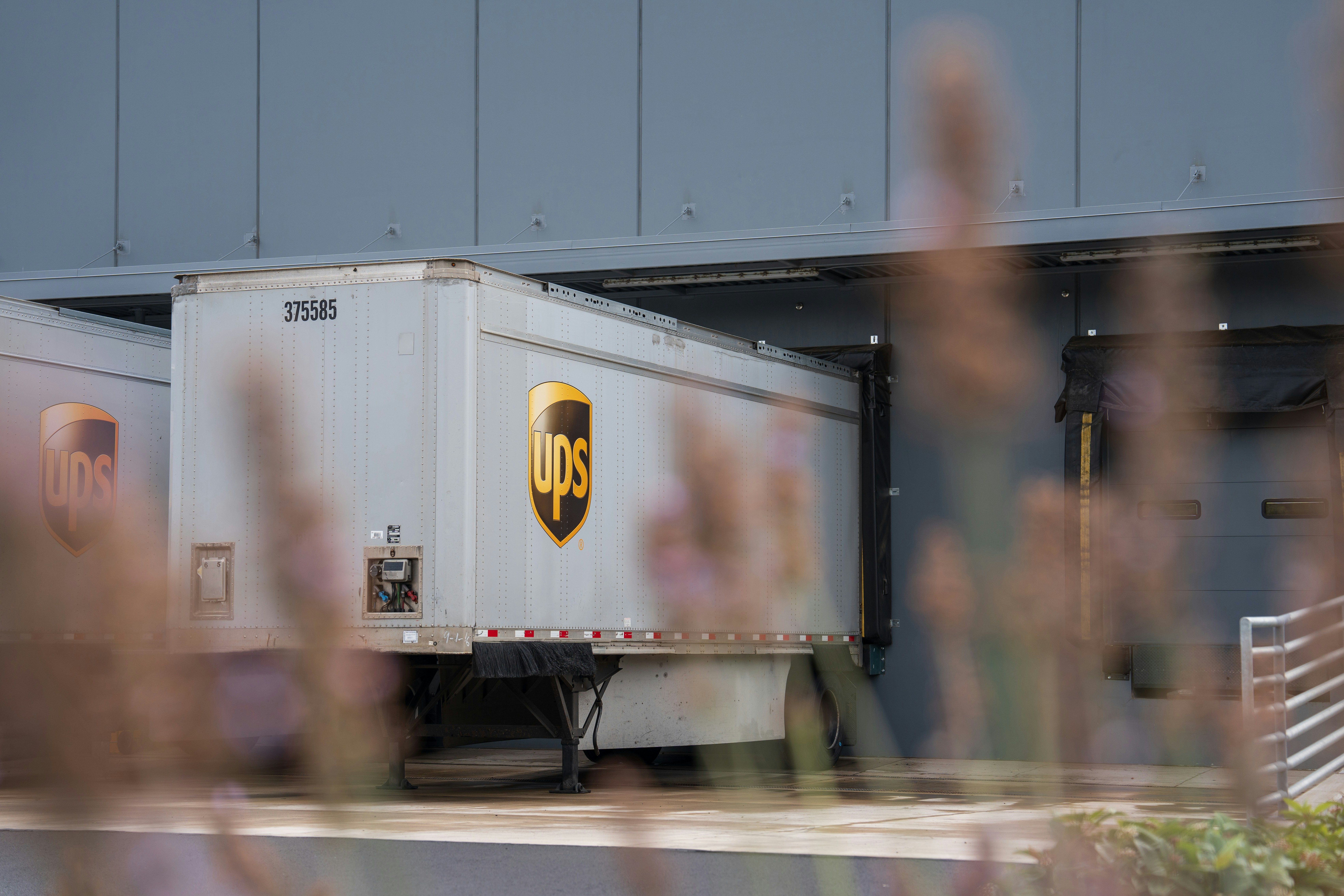
In January 2025, UPS said it had agreed with Amazon to cut the volume it handles for Amazon by more than 50% by the second half of 2026, per Supply Chain Dive. Amazon was UPS's largest customer. UPS kept pulling back through 2026, and in January it announced about 30,000 job reductions tied in part to that glide-down, per CFO Brew.
The reason was margin. Amazon volume was large and dense but low-yield, and UPS decided it would rather run a smaller network full of more profitable packages than a bigger one full of volume that barely paid.
For a smaller provider, the useful part is how UPS judged the account. A big logo with thin margins, heavy customization, and a profile that doesn't fit your building can use up capacity you could sell to better-fitting brands. If the largest parcel carrier in the country decided some volume isn't worth having, a 3PL can reasonably make the same call on a brand whose order profile doesn't pencil.
Walmart's automation push
In 2023, Walmart said it expected about 65% of its stores to be serviced by automated distribution by the end of fiscal 2026, per Fox Business. That kind of investment takes years to plan and pay back.
The reason was labor cost and throughput. Walmart was betting that wages and hiring difficulty would keep rising, and that at its scale, machines would handle volume more predictably than headcount.
Most 3PLs can't justify a Walmart-style automated DC, especially with client turnover risk on every contract. Still, the bet itself tells you something. A company with Walmart's data concluded that warehouse labor wasn't getting cheaper or easier to find. That's worth factoring into how you price multi-year contracts, and into which smaller automation projects (auto-baggers, put walls, AMRs) you look at more seriously.
Amazon resetting the wage floor
This September, Amazon raised its US starting warehouse wage to $20 an hour, effective September 27, per Yahoo Finance. Walmart starts around $14 and Target around $15.
Part of the reason is peak. Amazon needs a lot of people for a few months and wants first pick of the local labor pool. Part of it is retention in a workforce where turnover is expensive.
The implication is local and immediate. In any market where Amazon runs a large building, its floor becomes the number temps and staffing agencies measure against. If you're pricing peak labor off last year's wage, you're pricing off a market that no longer exists. Whether or not you match Amazon's wage, you need to know it moved the market around you.
FedEx's annual rate increase
FedEx set its January general rate increase at 5.9%, the fourth year in a row at that average, per CEP Research. Old Dominion moved its LTL increase up to October 5, a month early for the second straight year, per FreightWaves.
A carrier's GRI is partly a pricing decision and partly a statement about how much pricing power it believes it has. A repeated 5.9% tells you FedEx expects shippers to absorb it, and an LTL carrier moving its increase forward tells you it expects the same. The headline number also understates the real increase for most shippers once surcharges and accessorials are included.
For a 3PL, the useful response is contractual. If your agreements with brands don't have a clean way to pass through carrier increases, every January turns into a margin hit or an awkward conversation. The enterprise signal here is the pattern (steady increases, announced early), and the pattern is predictable enough to plan for.
Where the lens misleads
A few ways the translation from enterprise to 3PL tends to go wrong:
- Copying the action instead of the reason. Amazon's new partnership with Kuehne+Nagel covers AWS data-center logistics. The signal for a mid-market 3PL is Amazon tying more of the logistics chain to itself, since data-center work is a capital-heavy, specialized business most providers shouldn't chase.
- Ignoring the scale threshold. Wegmans is spending $110 million to bring distribution in-house, per Chain Store Age. Insourcing makes sense for a retailer with Wegmans' scale and steady volume. It's a reason to understand which of your clients are big and stable enough to consider it, and to make sure they see value from you beyond space and labor.
- Treating one announcement as a trend. A single facility closure or wage change can be local or specific to one company. The signal gets stronger when several large operators move the same way, or when one of them keeps making the same move for years.
Making it a habit
None of this takes much time. A few things worth watching on a regular basis:
- Earnings calls and guidance from UPS, FedEx, Amazon, and Walmart, especially comments on capital spending, network changes, and labor.
- Annual rate announcements, which usually land between September and November.
- Pre-peak wage and hiring announcements, typically late summer into early fall.
- Facility openings and closures in your own markets, since those move local labor and real estate before they move anything national.
I keep a short running note for each one: what they did, the reason they gave, and what it would mean in my building. Most entries go nowhere. The ones that repeat usually end up in a pricing model or a contract clause within a year.
Before you finalize peak labor rates and next year's brand pricing, check both against what the largest employer and the largest carriers in your market announced this fall.
Sources Supply Chain Dive: UPS to cut Amazon volume by more than 50% → CFO Brew: UPS cuts 30,000 jobs, continues Amazon glide-down plan → Fox Business: Walmart plans for 65% of stores to be serviced by automated supply chains → Yahoo Finance: Amazon raises minimum warehouse pay → CEP Research: FedEx leads 2027 rate increases → FreightWaves: 16 trucking companies hit bankruptcy court → Air Cargo News: Kuehne+Nagel enters long-term deal with Amazon → Chain Store Age: Wegmans investing $110M →